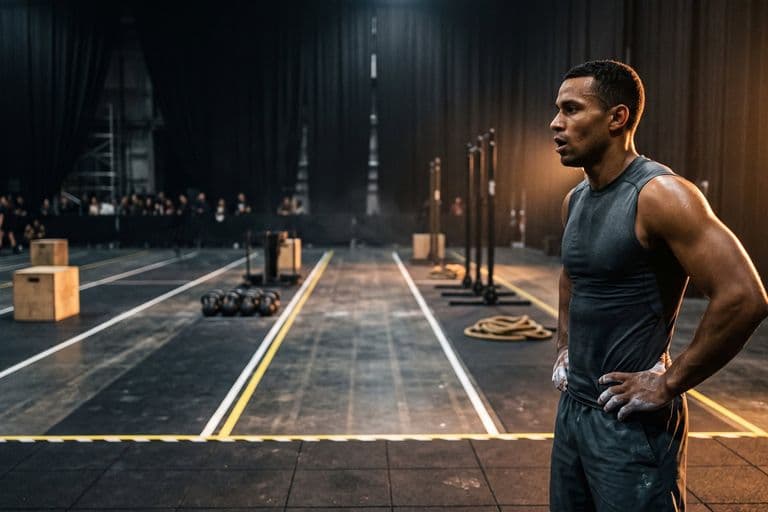
There are more of these events than there used to be and every one of them describes itself as the ultimate test. Four questions get you to a shortlist faster than reading all of it.
1. How much running do you want?
The single biggest differentiator. Formats sit on a spectrum from several kilometres of running to a few hundred metres between stations.
- You like running — pick a run-heavy format. You will spend most of the race doing the thing you are good at.
- You dislike running — pick a work-heavy format. It will still hurt, but it will hurt in a way you have trained for.
Do not pick a run-heavy race in order to fix your running. Fix your running, then pick the race.
2. How much skill are you willing to learn?
Some events include gymnastics or olympic lifting — muscle-ups, snatches, handstand walks. Those are skills, and skills take months, not weeks.
- Race formats — running, machines, carries, sleds. Mostly things you can already do. Trainable in eight to twelve weeks.
- Functional fitness competitions — technical movements, often unannounced. Realistically a season of preparation.
For a first event, a race format is far more likely to end with you finishing.
3. Alone or with someone?
Most formats offer doubles or relay categories. These are underrated as a first entry: the work is shared, you get recovery between efforts, and there is someone to be accountable to during the eight weeks beforehand.
4. How long have you got?
- Under 8 weeks — a team category, or an entry-level individual category if you already train.
- 8–12 weeks — an entry-level individual category in a race format is realistic from a reasonable base.
- A season — anything you like.
The mistake
Entering the competitive category first. Almost every format has an entry level and it exists for a reason. Finishing an entry-level race and wanting more is a good day. Being pulled from a Pro category at station six is not, and it is a surprisingly common way for people to decide this sport is not for them.