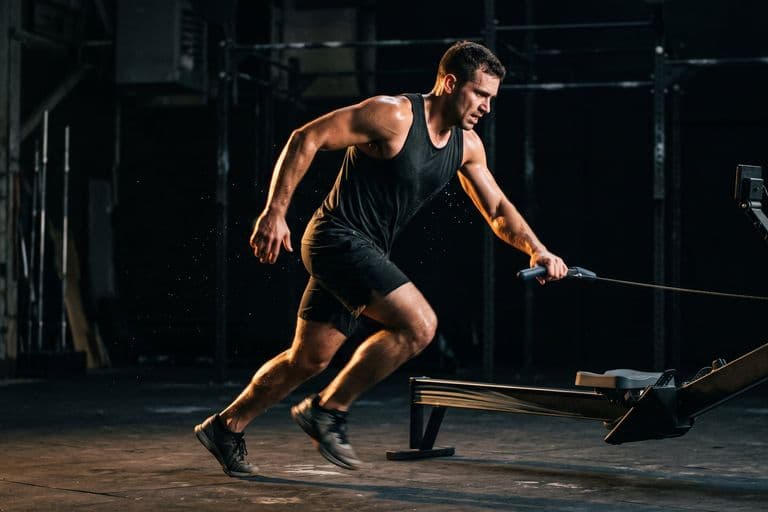
Watch the middle of the field at any hybrid race with a sled and you will see the same thing: strong people going nowhere. The sled punishes bad position more than it rewards raw strength, which is good news, because position is quick to fix.
The push
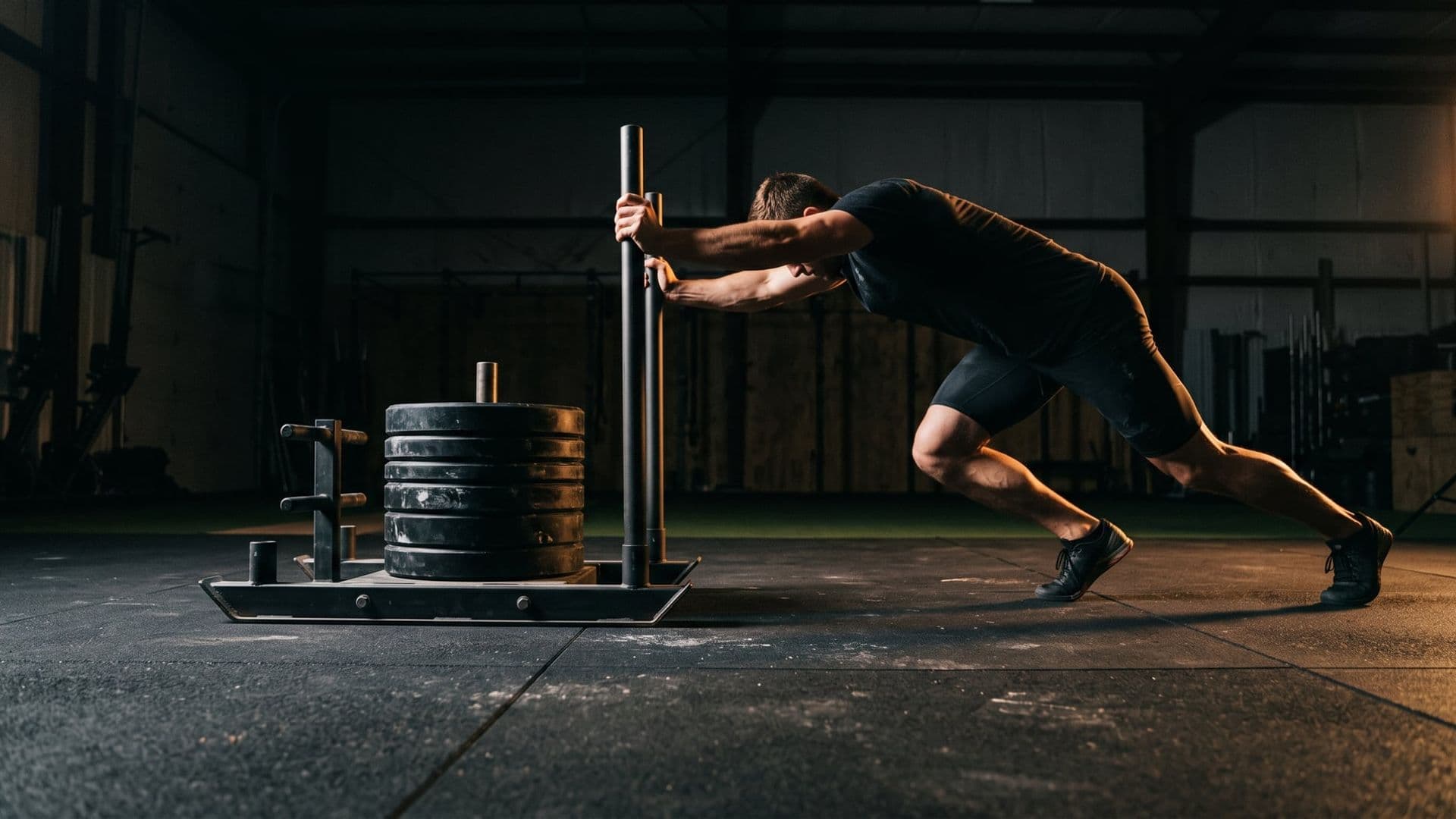
- Get low. Arms extended, body at a steep angle. The force you can apply depends on how close to horizontal you are.
- Grip low on the posts if the sled allows it. Higher hands mean a more upright angle and less usable force.
- Short steps. Rapid, small, continuous. Long driving steps feel powerful and produce stalling.
- Never stop. Static friction is much higher than sliding friction. A sled that stops costs several seconds and a large amount of energy to restart.
- Head neutral, eyes a couple of metres ahead. Looking up raises your chest and flattens your angle.
The pull
- Sit back into it. Use your bodyweight as the lever rather than pulling with your arms.
- Hand over hand, continuous. Big single pulls followed by a re-grip lets the sled stop.
- Set your feet. Braced, wide enough to be stable. Slipping is the main failure mode.
- Keep tension in the rope throughout. Slack means a dead stop, and see above.
A sled that stops is expensive. Almost everything in good sled technique is really about not letting it stop.
Surface and shoes
A sled on carpet, on turf and on a sports floor are three different exercises with three different loads. Find out what your race uses and practise on something comparable if you can.
Shoes matter more here than anywhere else on the course. You want grip and a stiff enough sole to push through. A soft, cushioned running shoe absorbs a meaningful part of the force you are trying to apply.
Training it
- Heavy pushes, short distances, full recovery — for position and force.
- Moderate pushes immediately after running — for the reality of race day.
- If you have no sled: heavy carries, hill sprints and a wall push are partial substitutes. Partial.