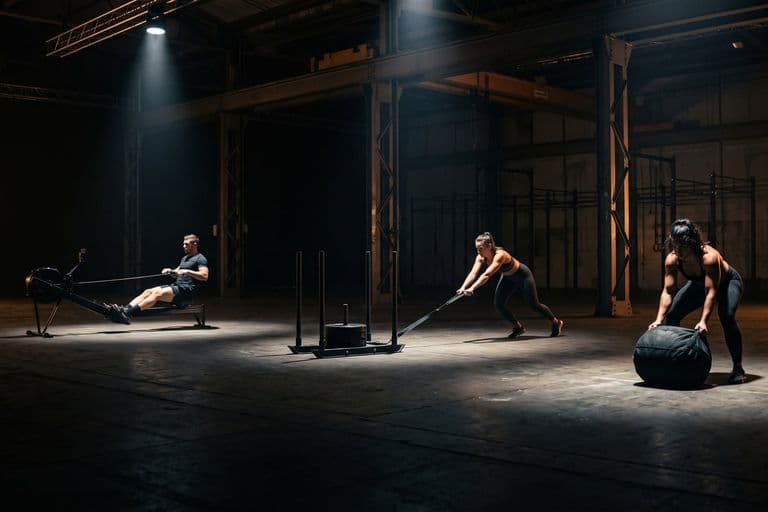
A marathon tests one quality very thoroughly. A powerlifting meet tests another. For a long time there was nothing in between that was organised enough to call a sport.
What it is testing
One quality, essentially: can you produce force when your aerobic system is already close to its limit, and can you then go back to moving efficiently?
That is a real physiological capacity and it is trainable, but almost nothing else trains it directly. Endurance training gets you very efficient at low force. Strength training gets you high force at low heart rate. The overlap is where these races live.
Why it grew
- It is measurable. A published format and a clock. You can compare this year with last year.
- It is practisable. Unlike a competition with unannounced workouts, you can train the actual event.
- It is accessible. No gymnastics, no olympic lifting, no technical barrier to entry.
- It is a race. It has a start line and a finish line, which turns out to matter to people.
Where it sits
- Versus running races — much shorter, much more varied, far more upper body.
- Versus functional fitness competitions — one continuous effort, published format, no skill barrier.
- Versus obstacle racing — controlled surfaces, standardised work, measurable rather than adventurous.
What it rewards
Being good at two things. A very fast runner with no strength and a very strong athlete who cannot run will finish near each other, both frustrated, and both beaten by someone who is merely quite good at both.
That is unusual in sport, and it is most of the appeal. It is also why the training tends to make people fitter in a general sense than either specialisation would.